
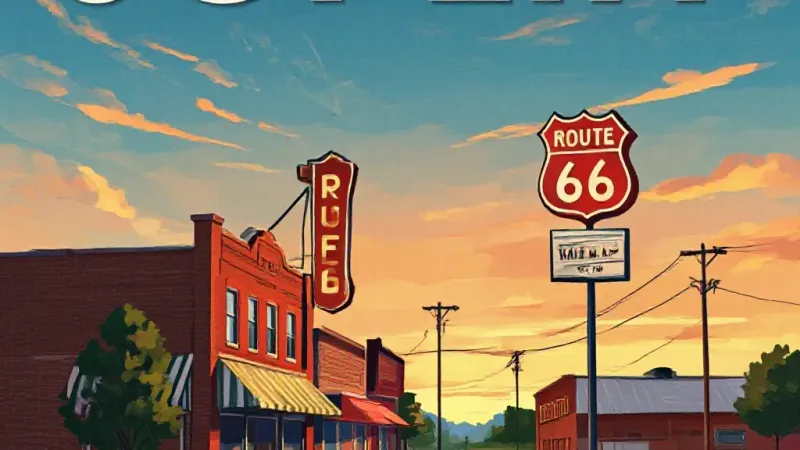
Long before Neosho featured brick storefronts or paved streets, the Ozark hills bore witness to stories now etched in stone. The earliest European-American settlers arrived in the region in the early 1830s, drawn by abundant natural springs. The community of Neosho was founded in 1833 as a scattering of cabins, with Newton County formally organized in 1838.
Life for these early families was characterized by rugged conditions, limited medical knowledge, and hard labor. In these initial years, before organized cemeteries existed, burials often took place on private land. Families typically selected elevated ground near their homesteads or shaded clearings on the edge of fields. Graves were dug by hand, coffins were constructed from local timber, and sites were marked with wooden crosses or simple fieldstones.
One of the area's oldest organized burial grounds, Burkhart Cemetery near Racine, Missouri, was established in the 1840s. Its stones reflect the lives of the earliest permanent settlers in Newton County, telling stories of short lifespans, young families, and the realities of frontier living. As Neosho developed into a more established town, formal cemeteries were created to serve its expanding population. Among these is the historic IOOF Cemetery in Neosho, founded in the mid-19th century. Established by the Independent Order of Odd Fellows, a fraternal organization dedicated to charity, the IOOF Cemetery became one of Neosho’s primary burial grounds. Graves dating back to the 1850s are found there, containing the resting places of veterans, merchants, farmers, civic leaders, and children, reflecting Neosho's transition from a settlement to a structured community.
The history of early cemeteries in Newton County is also marked by the Civil War, during which the region saw significant conflict, including battles near Newtonia. In the aftermath, soldiers were buried, and dedicated grounds were established to honor them. The Civil War Cemetery in Newtonia, Missouri, stands as a solemn reminder of this divided era, located near the historic battlefields and containing the graves of soldiers from that turbulent period in Missouri's history.
With the arrival of the railroad and the expansion of commerce, communities across Newton County grew. This growth brought improved materials, better record-keeping, and more formal burial customs. Families increasingly marked graves with durable stone, and memorial styles evolved as towns became more established. In Diamond, Missouri, Boyd Cemetery represents another important chapter in the county's burial history. Established during the 19th century as the area developed, Boyd Cemetery holds generations of families who helped shape Diamond and the surrounding countryside.
Across Burkhart, IOOF, Newtonia, and Boyd Cemeteries, the headstones convey a visual language of grief, faith, and hope. These historic cemeteries require ongoing stewardship; weather can soften inscriptions, and monuments can shift. Without care, valuable pieces of local history risk disappearing. Volunteers, families, churches, and local organizations contribute to protecting these sites, ensuring their stories remain visible for future generations.
Clark Funeral Homes has served families throughout Neosho and Newton County since 1890, caring for generations whose stories now rest in these historic cemeteries. For over a century, while customs and memorial traditions have evolved, the commitment to dignity, compassion, and honoring life has remained unchanged, continuing a tradition of service rooted in history and guided by respect for the community’s families.